
Local plans and community engagement: delivering best practice
With the recent government announcement that the local plan process will be ‘overhauled’ in a bid to speed up development, we’ve been reflecting on our experience of delivering community engagement for the Liverpool Local Plan.
Housing and Planning Minister Matthew Pennycook has provided an update on the government’s reforms to the local plan-making system, confirming legislative, funding, and timetable measures which are expected to accelerate the delivery of local plans. Changes will include regular assessments to ensure councils are meeting their targets, greater clarity on how plans should be prepared and updated, as well as digital tools to increase transparency on what land is available for new development. What is of most interest to our team at PLACED, however, is the expectation that these reforms to local plans will bolster opportunities for community engagement.
Our experience working with Liverpool City Council has reinforced what we consider best practice for public engagement on local plans – local authorities prioritising an inclusive, transparent and sustained approach, ensuring residents and stakeholders are kept informed and involved throughout the plan-making process. PLACED was commissioned by Liverpool City Council to deliver public engagement for its emerging Local Plan, consulting on both the scoping document and draft plan. Between July 2024 and November 2025, PLACED facilitated meaningful dialogue between the council and its diverse communities, ensuring local voices were heard and integrated into the planning process. Over one thousand people were engaged through youth workshops (PLACED Academy), online engagement, and in-person events. You can read more about our approach here.


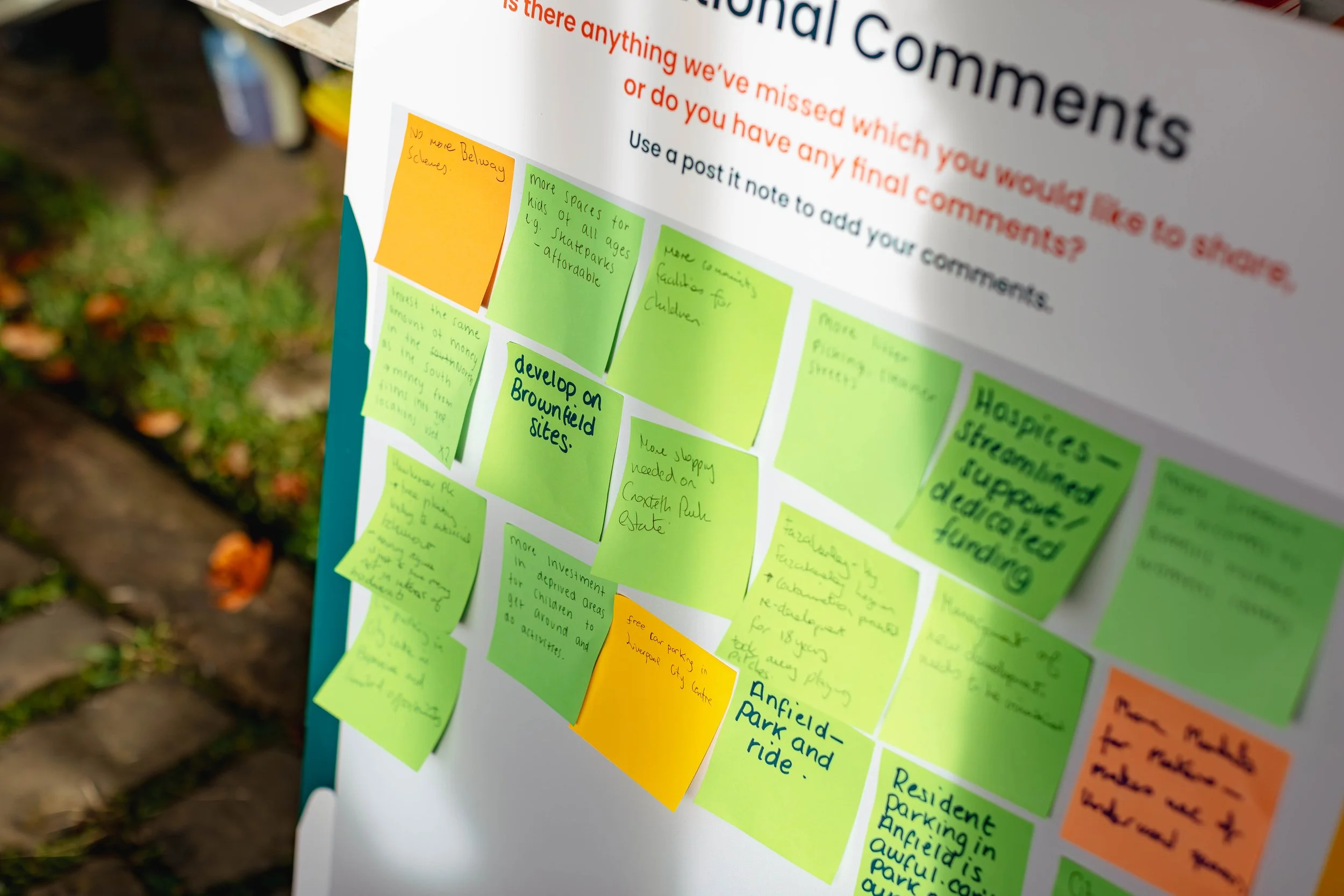
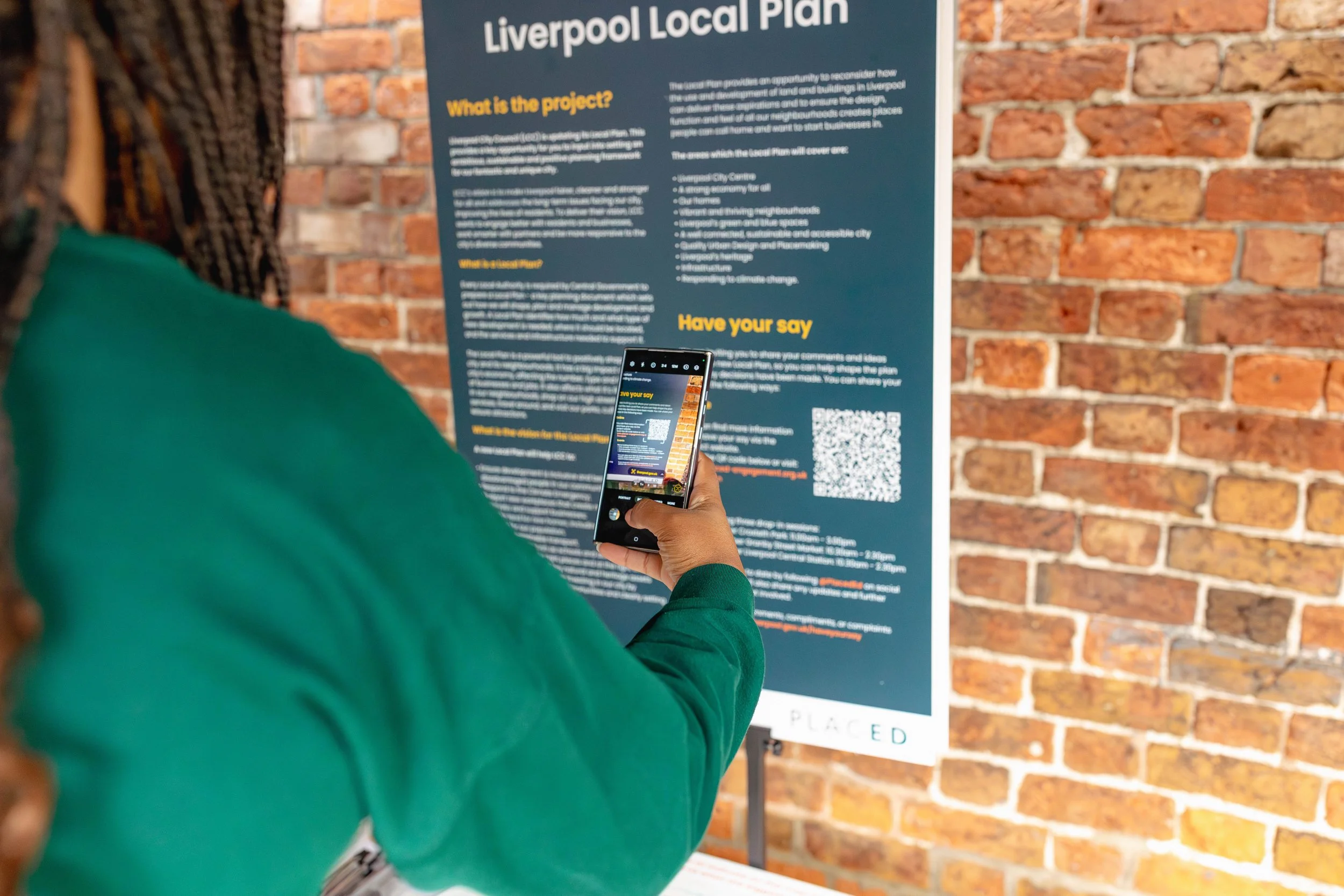
Our community engagement activities served to function as an accessible alternative to the council’s more technical consultation. Local Plans can, of course, be technical and outwardly complex to people who are not built environment professionals or policy makers. Particularly when we engaged on the draft plan, we recognised the need to simplify how we presented policies to people and make the feedback process more playful and engaging. This highlights how community engagement can create vital openings for making local plan-making more accessible and inclusive to a wider audience beyond those who are closely familiar with it.
The council ensured we were able to engage early on, getting feedback on the scoping document as well as the draft plan. Engaging early in the process meant that there was a clear opportunity for local people to genuinely help shape decisions. The council had effectively enabled us to create a ‘feedback loop’ with residents and local stakeholders, which ensured their voices were heard throughout the plan-making process. As community engagement specialists with experience in local plan consultation, we would perhaps have some critical considerations in relation to the government’s proposal to accelerate local plan-making processes.

Whilst the implicit reference to best practice community engagement in Pennycook’s statement is encouraging, his suggestion that speeding local plan-making processes will enable communities to more easily shape decisions is questionable. Indeed, there could be the risk that the pressure on local authorities to quickly deliver could mean that engagement is not delivered in a timely way, and opportunities for meaningful engagement are missed. Whilst the status quo of late engagement may be seen as the way to push plans along quickly, early engagement can help reduce problems later down the line, such as community pushback, which can bring with it financial challenges and a breakdown of trust between residents and local authorities.
Whilst the proposed reforms to local plan-making appear positive, it will be of paramount importance that local authorities are still able to deliver community engagement in a way that is timely and accessible, providing a realistic scope for residents and local stakeholders to shape decisions.